

Canon Tops Business Printer Market Share in 2026 What It Means for Businesses
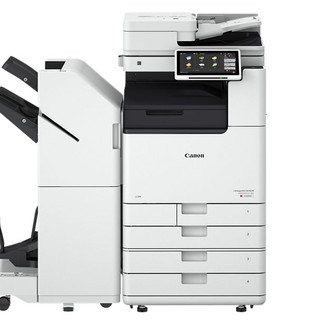
Canon reaching the top spot in business printer market share for 2026 says something bigger than “one company sold a lot of machines.” It shows where business printing is headed: connected devices, lower running costs, stronger security, and fewer headaches for the teams that manage them.
For years, many organizations treated printers as background equipment. They mattered only when they jammed, ran out of toner, or became a budget line no one wanted to explain. That has changed. Printers now sit inside a larger technology stack that includes cloud storage, mobile work, document security, workflow tools, and managed IT services.
Canon’s rise reflects that shift. The company has built a strong position by pairing dependable hardware with software, service programs, and pricing that appeals to businesses trying to control costs without giving up quality.

Why Canon’s 2026 lead matters
Market share does not always equal the best product in every category. A top ranking can reflect supply chain strength, channel relationships, brand trust, pricing, service coverage, or a product mix that fits current demand. In Canon’s case, the 2026 lead appears to come from several factors working together.
Business buyers are not only comparing print speed anymore. They are asking bigger questions:
How much will the printer cost over five years?
Can IT manage the device remotely?
Does it support secure printing?
Can employees print and scan from cloud tools?
How often will it need service?
Can the vendor support multiple locations?
Canon has performed well because it answers many of those questions across a wide range of needs. A small business might choose a compact imageCLASS device. A larger organization might standardize on Canon imageRUNNER ADVANCE systems. Print-heavy departments may look at Canon’s production and high-volume options.
That range matters. Many competitors do well in one segment, but fewer can cover small teams, midsize offices, enterprise fleets, and production environments under one brand.
Canon Tops Business Printer Market Share in 2026 What It Means for Businesses is also a useful signal for procurement teams. It shows that buyers are rewarding vendors that combine hardware, software, service, and predictable costs.
The technology choices behind Canon’s momentum
Canon’s success is tied to the way business printing has changed. The printer is no longer just a machine that produces pages. It is a networked endpoint, a document capture tool, and often a connection point between paper and digital workflows.
Security has become a buying factor
Printers can store documents, connect to email systems, access cloud folders, and sit on company networks. That makes them part of the security conversation.
Canon has invested heavily in features such as user authentication, secure print release, device access controls, encrypted communication, and administrative settings that help IT teams manage risk. These capabilities matter in industries that handle sensitive information, including healthcare, legal services, finance, education, and government contracting.
HP has also made printer security a major selling point, often positioning its business printers around endpoint protection. Xerox and Ricoh emphasize secure fleet management and compliance support. Canon’s advantage is that it has kept security features closely tied to usability. A feature matters only if teams actually turn it on and use it.
Cloud and mobile printing are now expected
Hybrid work may not look the same at every company, but employees still expect flexible ways to print and scan. Canon’s business devices commonly support mobile printing, cloud scan destinations, and links to document management systems.
This helps reduce friction. A field team member can print a packet before a site visit. A manager can scan signed paperwork into a shared folder. An accounting team can route invoices from paper to digital processing.
Epson has gained attention with business inkjet systems that reduce energy use and cartridge waste. Brother remains strong in simple, reliable printers for smaller teams. Canon’s edge is its ability to connect everyday printing with broader document workflows.
Print quality still matters
Businesses may print less than they did a decade ago, but the documents that remain often matter more. Proposals, contracts, client packets, signage, training materials, compliance forms, and branded customer documents need to look professional.
Canon’s long history in imaging gives it credibility here. The company’s output quality, color handling, and scanning performance are part of its appeal. This is especially true for organizations that need both office printing and high-quality document reproduction.
Industry analysts often point to the same pattern: business printer buyers are no longer picking devices by speed alone. Service reliability, fleet control, security, and lifetime cost now carry as much weight as pages per minute.

Customer satisfaction helped turn buyers into repeat buyers
Canon’s market share win is not only about attracting first-time buyers. It is also about keeping customers when leases renew, fleets get refreshed, and office needs change.
Business printers are sticky purchases. Once a company trains staff, sets up drivers, builds workflows, stocks supplies, and signs service agreements, switching brands takes effort. If the experience is poor, teams will switch anyway. If the experience is steady, they often renew.
Canon benefits from several satisfaction drivers.
Reliability
Printer downtime carries hidden costs. A broken device can delay shipping documents, client files, legal packets, training materials, or invoices. Canon’s reputation for dependable hardware supports repeat purchase decisions.
Service and dealer networks
Canon works through direct sales, dealers, and service partners. For businesses with multiple locations, support coverage can matter as much as device features. A fast repair response can make a bigger impression than a spec sheet.
Usability
A printer that confuses users creates help desk tickets. Touchscreens, scan workflows, user profiles, and clear maintenance prompts all affect satisfaction. Canon devices tend to compete well here, especially in multifunction environments where scanning is as important as printing.
Fleet consistency
Many organizations prefer one brand across departments or locations. It simplifies supplies, service, administration, and user training. Canon’s broad catalog makes that easier than mixing several brands.
Customer satisfaction also depends on expectations. A low-cost desktop printer should not be judged like a high-volume multifunction fleet device. Canon’s strength is that it offers paths across those tiers, which helps businesses grow without starting over.
Competitive pricing does not always mean the cheapest printer
Canon did not reach the top by being the lowest-cost option in every category. Business printer pricing is more complicated than the sticker price.
Procurement teams look at the total cost of ownership, which includes:
Purchase price or lease cost
Toner or ink supplies
Maintenance kits and replacement parts
Service contracts
Energy use
Downtime
IT support time
Device lifespan
Print management software
A cheap printer can become expensive if toner costs are high, pages are unreliable, or IT spends too much time managing it. A higher-priced device can be the better value if it runs longer, uses supplies efficiently, and reduces service calls.
Canon competes well because it offers devices across price bands while giving businesses options for managed print services, predictable supply programs, and fleet planning. That helps procurement teams move away from one-off purchases and toward planned print environments.
How key competitors compare
The business printer market remains crowded. Canon’s top ranking does not mean rivals are weak. It means Canon has found a strong balance across several buying factors.
Brand | Common strengths | Where Canon often competes well |
HP | Strong security messaging, broad small business lineup, wide retail and channel reach | Canon often stands out in imaging quality, multifunction workflows, and enterprise document handling |
Epson | Energy-efficient business inkjet, lower heat output, fewer consumable parts in some models | Canon competes with stronger laser and multifunction depth across office and production needs |
Brother | Simple setup, compact devices, strong value for small teams | Canon offers broader scaling for growing fleets and more advanced document workflows |
Xerox | Enterprise print heritage, managed print services, workflow software | Canon competes with a wider mix of office, imaging, and production options |
Ricoh | Strong enterprise services, production print, document management | Canon often appeals where image quality, device usability, and fleet consistency are priorities |
Konica Minolta | Strong multifunction systems, production print, office services | Canon competes closely in enterprise fleets and benefits from its imaging reputation |
The practical takeaway is simple: there is no single best printer brand for every business. Canon’s 2026 lead suggests that more buyers found its mix of reliability, usability, price, and support compelling enough to choose it over strong alternatives.

What industry experts are watching next
Print industry experts are paying attention to three changes that could shape the next round of competition.
Managed print is becoming more strategic
Managed print used to mean automatic toner shipments and service calls. Now it can include usage analytics, right-sized fleets, security settings, user controls, sustainability reporting, and integration with IT service management.
Canon’s position improves when businesses view printing as part of IT operations rather than a supply closet issue. HP, Xerox, Ricoh, and Konica Minolta are also strong in managed print, so this will remain one of the most competitive areas.
Experts generally see managed services as a way to reduce waste. Many businesses still have too many underused devices, mismatched supplies, and unclear print policies. A well-managed fleet can cut unnecessary printing and improve reliability at the same time.
Sustainability is influencing print decisions
Energy use, cartridge waste, device longevity, and recycling programs now show up in more purchasing conversations. Epson often leads with energy-efficient inkjet messaging. HP highlights cartridge recycling and device efficiency. Canon has its own environmental programs and product efficiency efforts.
For buyers, the key is to ask for measurable details. A vendor’s green claims matter less than actual energy ratings, supply yields, recycling options, and device consolidation plans.
AI and automation may change document workflows
The next growth area may not be printing more pages. It may be helping businesses capture, classify, route, and store documents with less manual work.
Canon, Xerox, Ricoh, HP, and others all have reasons to connect print hardware to workflow software. Scanning paper into the right folder is useful. Extracting data, applying rules, and helping route documents is more valuable.
That is where the market may move next. The printer becomes a gateway for document automation, not only a page output device.
What Canon’s lead means for businesses buying printers
Canon’s 2026 market share success gives businesses a useful benchmark, but it should not replace a careful buying process. A popular vendor can still be the wrong fit if the device, contract, or service model does not match the organization’s needs.
A smart printer investment starts with a clear look at usage.
Review real print behavior
Before comparing models, businesses should understand what they actually print and scan. Guesswork often leads to oversized devices, undersized devices, or too many machines.
Useful questions include:
Which departments print the most?
How much color output is truly needed?
Are employees scanning to email, cloud folders, or document systems?
Which devices break down most often?
Are there security rules for sensitive documents?
How many locations need support?
This review can reveal waste. It may also show that the right answer is fewer devices with better placement, stronger controls, and better support.
Compare lifetime cost, not only device price
A printer that costs less at purchase may cost more over time. Businesses should ask vendors for page yield estimates, supply pricing, service terms, energy data, and expected duty cycles.
For leased devices, the contract matters as much as the hardware. Pay attention to overage charges, service response terms, automatic renewal clauses, and supply coverage.
Match the brand to the use case
Canon is a strong choice for many business environments, especially where image quality, multifunction use, fleet consistency, and service support matter. HP may be attractive for organizations that prioritize endpoint security and familiar small business devices. Epson may fit teams focused on lower energy consumption and inkjet economics. Brother may be ideal for smaller teams that need simple, low-maintenance devices. Xerox, Ricoh, and Konica Minolta remain serious choices for enterprise services and production workflows.
The best decision comes from matching the use case, not following the loudest brand claim.

The bigger business technology lesson
Canon’s rise to the top of the 2026 business printer market is not just a printer story. It reflects a broader technology pattern. Businesses are choosing tools that are easier to manage, easier to secure, and easier to justify over time.
That is why Canon’s mix of reliable hardware, useful software, customer support, and competitive pricing has resonated. It also explains why competitors remain close behind. The market is no longer won by print speed alone.
For businesses planning a printer refresh, the lesson is clear. Do not buy based on brand rank alone, but do pay attention to why a brand is gaining share. Canon’s 2026 performance suggests that buyers value practical technology, strong support, and predictable costs.
The best printer investment is the one that fits real workflows, protects documents, reduces waste, and keeps teams moving without constant attention. Canon’s market lead shows where many companies are finding that balance, and it gives every business a useful standard for judging its next print decision.


Comments